Keir Starmer says he will not “walk away” and “plunge the country into chaos” as his Labour Party suffers massive losses in the local elections
Sir Keir Starmer has insisted he will not resign after Labour suffered heavy losses in local elections, with Reform UK making sweeping gains across England and turning the results into a major test of the prime minister’s authority.
Speaking after the first major wave of results, Starmer said Labour’s performance reflected voters’ frustration that their lives had not improved enough under his government. “I’m not going to walk away,” he said, adding that he would not “plunge the country into chaos.” The comments came as Labour lost hundreds of councillors and control of several councils in what party figures described as a deeply damaging night.
Early figures showed Reform UK leading the declared council-seat count, with 399 seats and a net gain of 397 after 46 of 136 councils had declared. Labour stood at 253 seats, down 259, while the Conservatives were also hit hard, falling 171 seats to 256. The Liberal Democrats had 249 seats, up 36, while the Greens had 51, up seven.
The results underline the scale of the political backlash facing Starmer less than two years after he entered Downing Street. GOV.UK states that Starmer became prime minister on July 5, 2024, after leading Labour back into government, but the local election results now raise serious questions about whether his administration has lost momentum with voters.
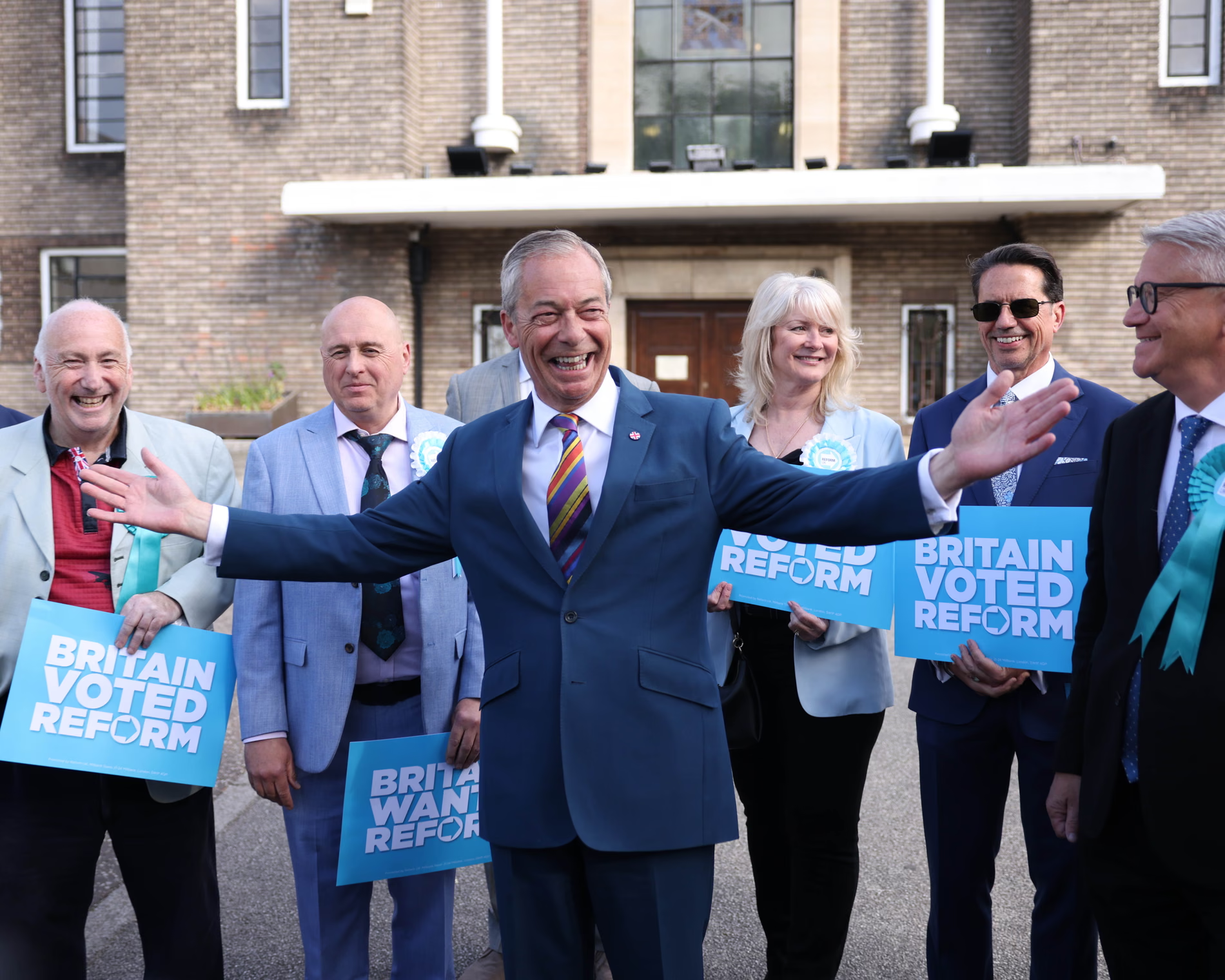
Reform UK, led by Nigel Farage, appeared to be the clear winner of the early count, gaining ground in both Labour and Conservative areas. The Guardian reported that Labour lost control of several key councils, including Hartlepool, Tameside, Redditch, Tamworth, Exeter, Wandsworth and Southampton, while Reform gained control in areas including Essex and Newcastle-under-Lyme.
The losses have triggered renewed pressure on Starmer from within Labour. The Associated Press reported that the results have fuelled speculation about his future, with the party losing support not only to Reform but also to the Greens and Liberal Democrats. Deputy Prime Minister David Lammy, however, urged stability and warned against changing leadership during a period of political volatility.
For Labour, the danger is not only the number of seats lost but the type of areas where support has fallen. Defeats in traditional Labour territory suggest the party is struggling to convince working-class and former “red wall” voters that it is delivering the change promised at the general election.
Starmer accepted responsibility for the setback but framed the result as a reason to continue rather than quit. His message was that Labour had been elected to improve living standards and that walking away now would betray that mandate.
The wider election map also points to a more fragmented political landscape. The Conservatives suffered further losses, the Liberal Democrats gained ground in parts of England, and the Greens continued to make advances in urban areas. The Guardian reported that more than 30 million people were eligible to vote in elections across England, Scotland and Wales, including contests for 136 local councils in England.