Two Labour MPs have called for Keir Starmer to resign after disastrous performance in local elections
Jon Trickett and Ian Lavery joined growing criticism from inside Labour as Reform UK surged and the prime minister insisted he would not step down.
Keir Starmer is facing a fresh internal Labour backlash after two Labour MPs, Jon Trickett and Ian Lavery, called for him to resign following a damaging set of local election results for the party.
The calls came after Labour suffered heavy losses across parts of England, with Reform UK making major gains in former Labour heartlands and Conservative areas. Starmer admitted the results were “very tough” but rejected pressure to quit, saying voters were frustrated that change had not come quickly enough and insisting he would not “walk away” from his responsibilities.
Trickett, the Labour MP for Normanton and Hemsworth, said the message from his constituency was that it was “curtains for Keir,” according to reports of his BBC comments. He argued that many Labour voters in northern England had lost confidence in the prime minister’s leadership. Trickett has represented his area in Parliament continuously since 1996.
Lavery, the Labour MP for Blyth and Ashington and a former Labour Party chair, also called for Starmer to go. He warned that Labour could face an existential crisis if it did not change direction, saying Starmer’s continued leadership could “kill the Labour party,” according to the Guardian’s report of his BBC interview.
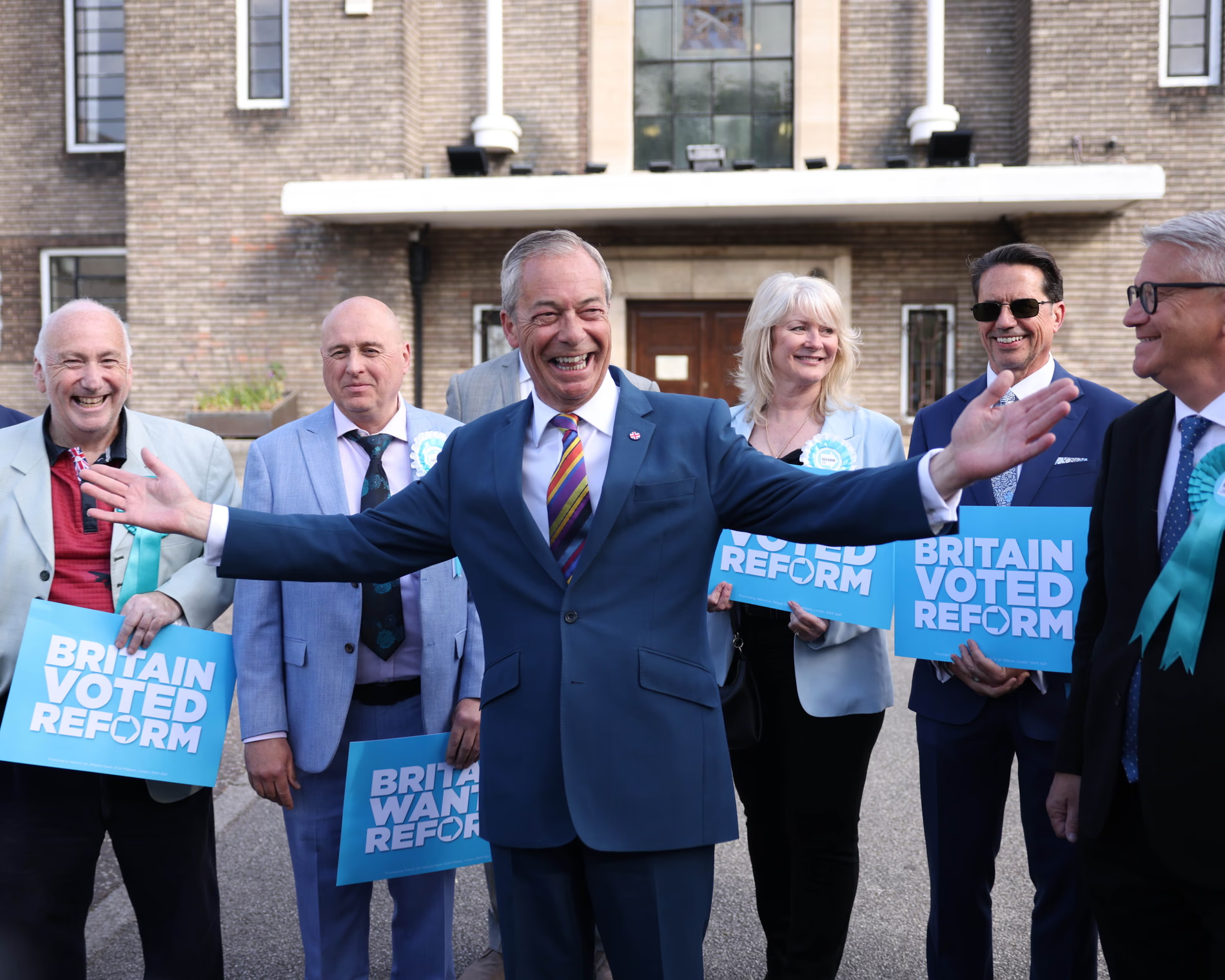
The interventions deepen the sense of crisis around Starmer after a night in which Labour lost control of several councils and saw Reform UK advance sharply. By Friday morning, Labour had lost around half of the council seats it was contesting, including control in Hartlepool, Tameside, Redditch and Tamworth. Reform had gained hundreds of seats in early counting and took control of Havering, its first London council.
Starmer attempted to frame the result as a warning from voters rather than a fatal blow to his leadership. He said Labour had been elected to tackle the country’s problems and that resignation would risk plunging the country into instability. He also accepted responsibility for the results, saying there was “no sugarcoating” the scale of the setback.
The pressure on Starmer is not limited to Trickett and Lavery. The Guardian reported that other Labour figures, including Hartlepool MP Jonathan Brash and former shadow chancellor John McDonnell, have also raised questions about his leadership or called for a timetable for his departure. Brash said Starmer should set out an orderly transition plan, while McDonnell said the leadership question now had to be on the agenda.
Senior cabinet figures, however, have so far stood behind the prime minister. Deputy Prime Minister David Lammy warned against removing a leader during a difficult political moment, saying Labour should not “change the pilot during a flight.” Defence Secretary John Healey also argued that Starmer could still turn the situation around.
The results have exposed a wider fragmentation in British politics, with voters moving away from both major parties. Reform UK gained ground in working-class areas once considered safe Labour territory, while the Liberal Democrats, Greens and Conservatives also competed for disillusioned voters in different parts of the country.