Merz says Germany is no longer Europe’s “magnet” for illegal migration after a sharp fall in asylum claims
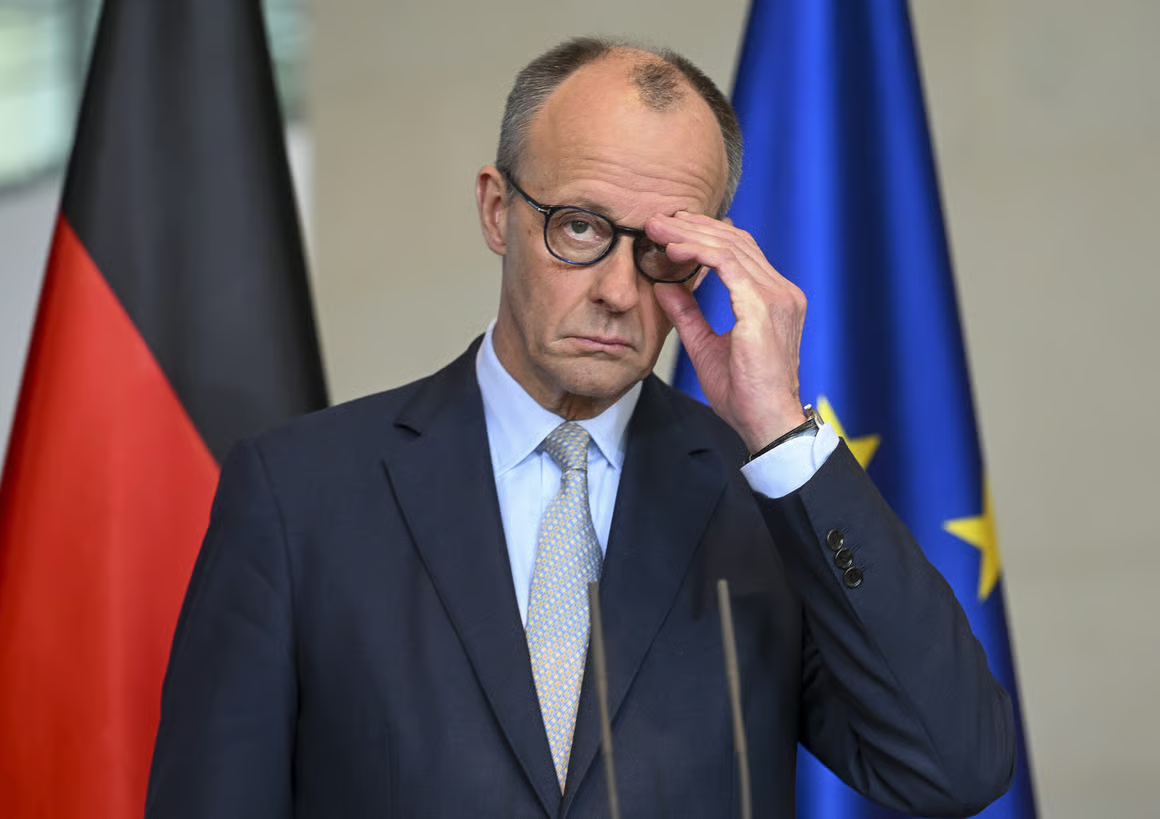
German Chancellor Friedrich Merz has declared that Germany is “no longer a European magnet for illegal migration,” pointing to a sharp fall in arrivals and asylum claims since the peak recorded in 2023.
In his latest address, Merz said Germany had reduced illegal migration by 70% compared with 2023. He also said that, for the first time since 2015, Germany was no longer the European country with the highest number of asylum seekers.
The claim comes as Germany’s conservative-led government tries to present tougher border and migration policies as one of its main achievements after a difficult first year in office. Reuters reported this week that Merz’s government has pointed to a steep fall in irregular immigration and asylum approvals, even as disputes over the economy, pensions and healthcare have weakened confidence in the coalition.
Official EU data supports the central trend behind Merz’s statement. Eurostat reported that first-time asylum applications across the EU fell by 27% in 2025 compared with 2024. Spain received the most first-time asylum applications, with 141,000, followed by Italy with 126,600, France with 116,400 and Germany with 113,200.
That marks a major reversal from 2023, when Germany received about 329,000 first-time asylum applications and remained the EU’s largest destination for asylum seekers. By 2025, Germany’s first-time asylum applications had fallen by more than 116,000 compared with the previous year, a decline of 50.7%, according to Eurostat.
Merz’s government has made migration control one of its defining policies. On its first day in office in May 2025, Interior Minister Alexander Dobrindt ordered Germany’s federal police to reject undocumented migrants, including some asylum seekers, at the country’s borders. The move rescinded a 2015 instruction from the Angela Merkel era that had allowed undocumented third-country nationals to enter Germany.
The policy has remained legally and politically controversial. A Berlin administrative court ruled in June 2025 that the expulsion of three Somali asylum seekers to Poland was unlawful, saying Germany should have first determined which EU country was responsible for their claims under the Dublin rules. Merz responded that the ruling would not stop his government’s migration crackdown, though he said it would operate within European law.
Migration has become one of Germany’s most sensitive political issues, especially since the 2015 refugee crisis and the later rise of the far-right Alternative for Germany. Reuters reported that the AfD has benefited from voter concern over migration and has recently polled ahead of Merz’s CDU in some surveys.